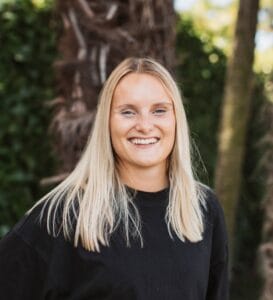
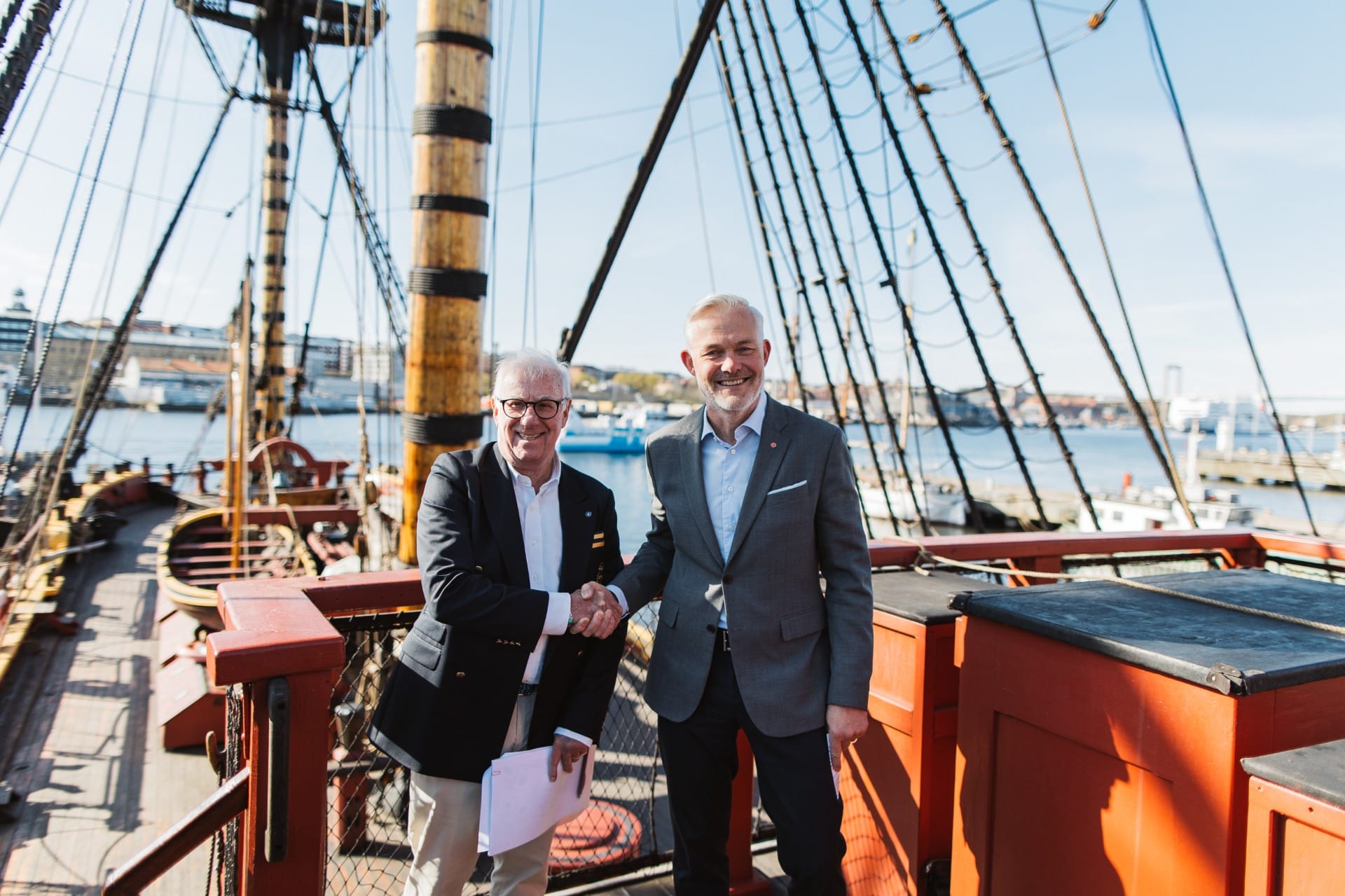
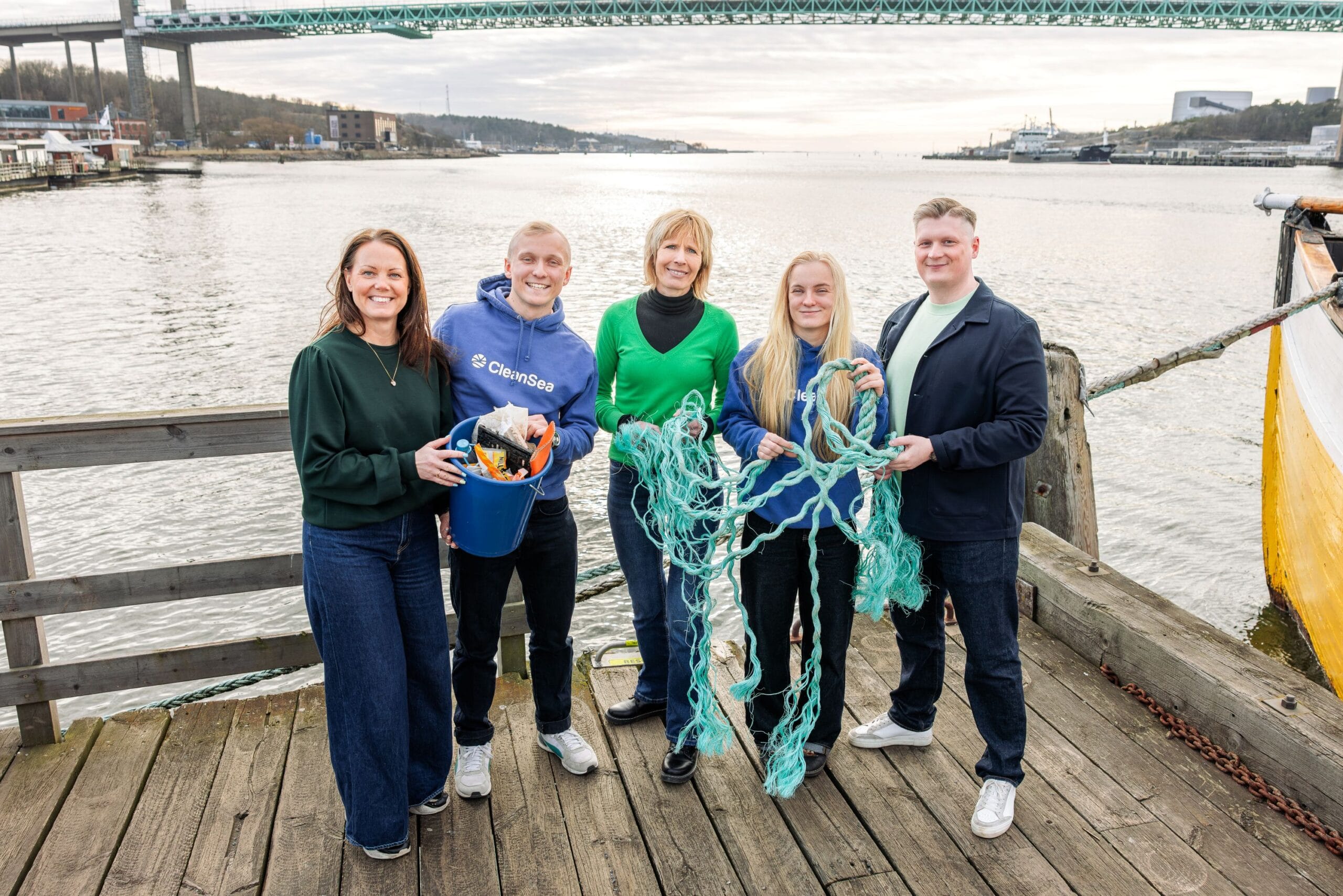
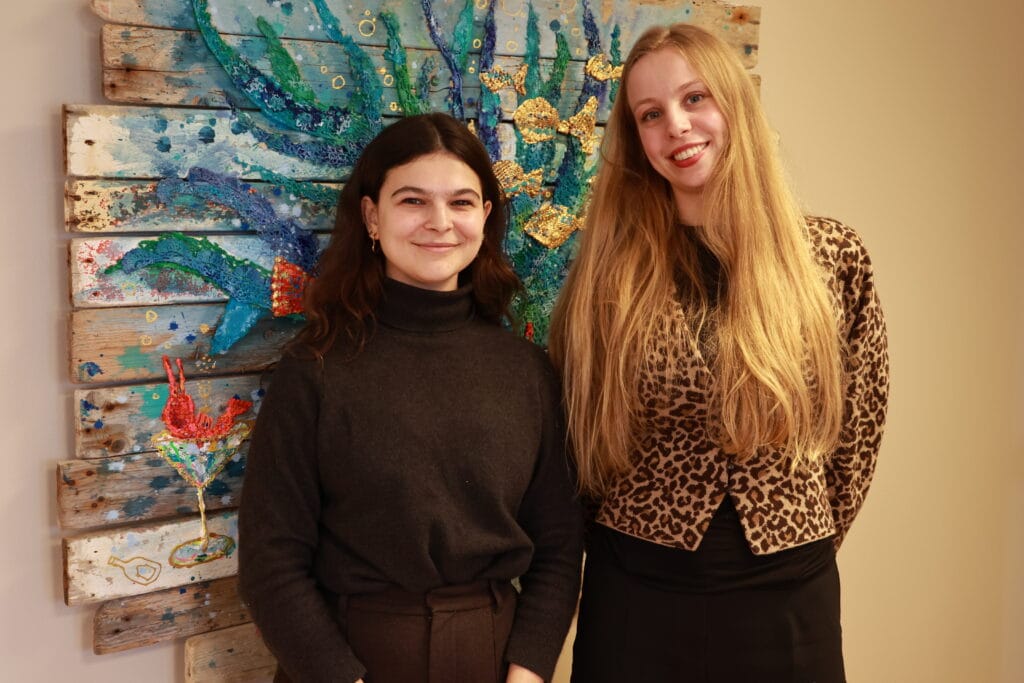
Pictured: Patrik Westraeus; Head of Sustainability at Greencarrier, Josefine Widegren; Owner and Board Member, Ida-Maja Hassellöv; Professor at Chalmers, Sofia Wartenberg; PhD Student, Alexandra Schloss; PhD Student, Anna Svensson; Head of Project Management at Greencarrier
Greencarrier has sponsored two new PhD students to join its maritime research partnership with Chalmers University of Technology, further advancing research into the environmental impact of shipping in the particularly vulnerable Baltic Sea.
The researchers join a project led by Ida-Maja at Chalmers, which aims to address knowledge gaps in how maritime activities affect marine ecosystems – particularly in areas where data is limited and regulation remains unclear.
“Shipping is essential to global trade, but its environmental impacts are still not fully understood,” says Ida-Maja. “By strengthening the research team, we can begin to address some of the more complex and overlooked effects on marine ecosystems.”
The two PhD projects focus on different but complementary aspects of shipping’s environmental footprint.
Mapping the hidden risks of tank cleaning
One of the PhD students, Sofia Wartenberg, will study cumulative environmental risks from ship operations. The work will combine probabilistic modelling with available operational data to enable decision support in the transition towards more sustainable shipping.
The first year, focus will be on tank cleaning operations on chemical tankers. The process involves washing cargo tanks after unloading, and depending on the type of cargo, contaminated wash water may be discharged into the sea. This part of her research is conducted as a risk assessment commissioned by the Swedish Transport Agency under the Baltic Sea Action Plan.
Access to data remains a key challenge. While ships are required to document cargo operations, much of this information is commercially sensitive and not readily available to researchers or authorities.
Understanding the impact of ship wakes on marine ecosystems
The second PhD student, Alexandra Schloss, will examine the impact of ship wakes on coastal ecosystems. Ship movements generate turbulence in the water, which can influence oxygen levels and the distribution of nutrients – factors that are critical to marine life.
Her research will focus initially on the Stockholm archipelago, where intensive shipping traffic overlaps with areas affected by low oxygen conditions. By combining vessel tracking data with oceanographic models, the project aims to assess how repeated ship passages may affect local ecosystems over time.
Both projects address areas where scientific understanding is still developing, particularly regarding cumulative and indirect effects of shipping.
According to the research team, improving knowledge in these areas is essential for informing future policy and supporting more sustainable maritime operations.
The addition of the two PhD students marks a continuation of Greencarrier’s collaboration with Chalmers to advance research on sustainable shipping.
“Collaboration between industry and academia is key to accelerating the transition to more sustainable shipping,” says Josefine Widegren, Owner and Board Member at Greencarrier. “By supporting this research, we hope to contribute to both scientific understanding and practical solutions.”