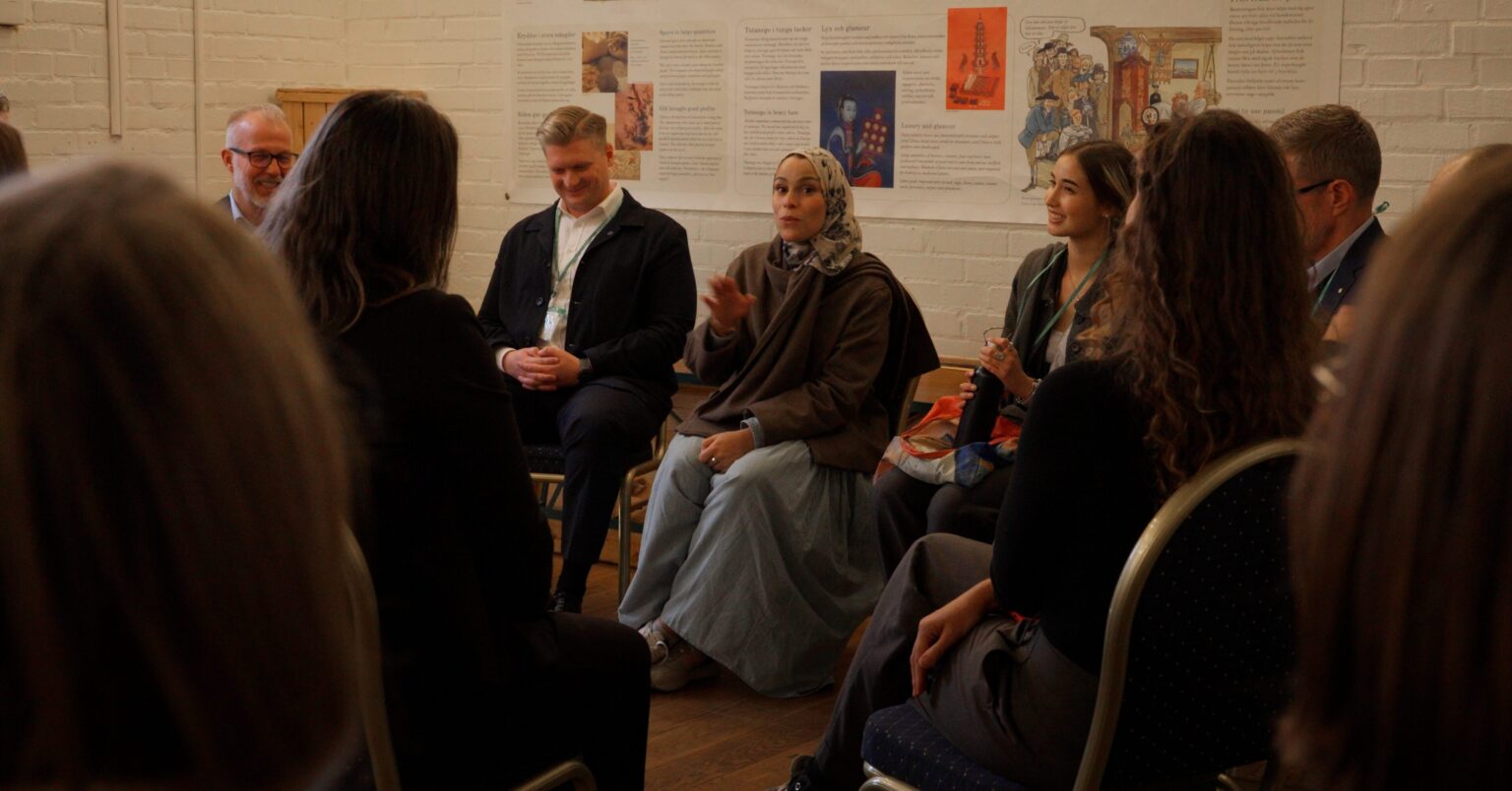
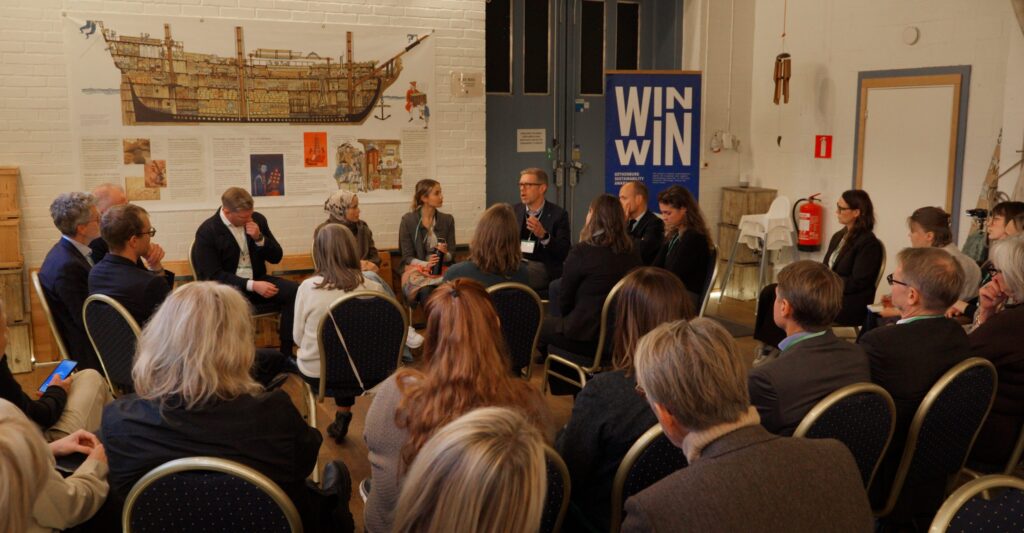
Last week Greencarrier and the WIN WIN Gothenburg Sustainability Award hosted a round table discussion with leaders and experts from politics, business, research and civil society. Held under this year’s award theme Gender-Equal Societies. The discussion focused on how institutions can rebuild trust and turn fragmented efforts into shared environmental action.
The logistics and shipping industry affects the climate and marine ecosystems. Through Greencarrier Blue Initiative, we support projects, researchers and organizations working to protect our planet and oceans.
Dr Murabit: Trust is built by people
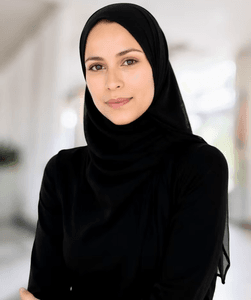
Dr. Alaa Murabit received the 2026 WIN WIN Award for leadership that puts gender equality at the heart of peace, resilience and sustainable development. Her work spans local community organizing and the UN Security Council. At the roundtable, she said an institution is a group of people, and that trust grows through the relationships people have with it.
– When we value someone’s perspective, we can relate to it or at least incorporate it into our own thinking, even if we don’t always agree. What we have found is that this dynamic translates very strongly to institutions. If people you trust work for an institution, you are far more likely to trust that institution, she said.
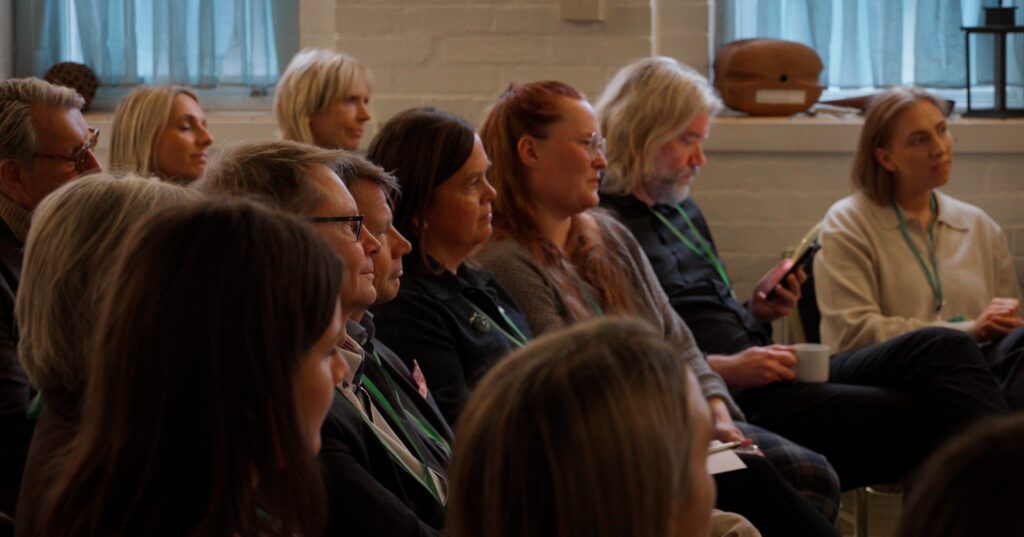
According to Murabit, institutions lose credibility when they feel distant and closed off, and gain it by being present:
– If you actively engage in your community and your institution takes a very hands-on approach to engaging, investing, and supporting the community around it, it’s a lot more likely to be seen as trustworthy because it’s present.
Julieta Martínez: finding common ground in a tired generation
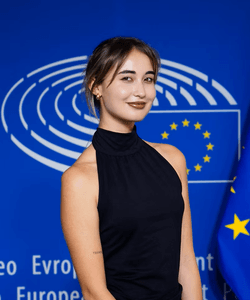
Julieta Martínez, 22, received the 2026 WIN WIN Youth Award for leadership that puts young women at the heart of gender equality, climate resilience and sustainable change. Her work includes building capacity, connecting young people across borders and opening doors for women to lead. She shared survey data showing that more than 75 percent of young people in Latin America feel their governments serve only their own interests. She emphasized that figures like these need to be heard together with the human stories behind them.
– In Latin America, there is a context where people have been so brutalized and exhausted from constantly fighting for basic rights. Losing battle after battle and then winning another, that so many are simply tired. We must be very patient in how we approach these topics and make people understand that this involves all of us.
Based on her experience in Chile, she said leaders should not try to be the single voice of a whole community. They get further by moving specific, agreed-upon interests forward:
– People shouldn’t just try to represent an entire group of others but rather represent specific interests where they can find common ground. That approach has been really useful for us in Chile.
Who gets a seat at the table
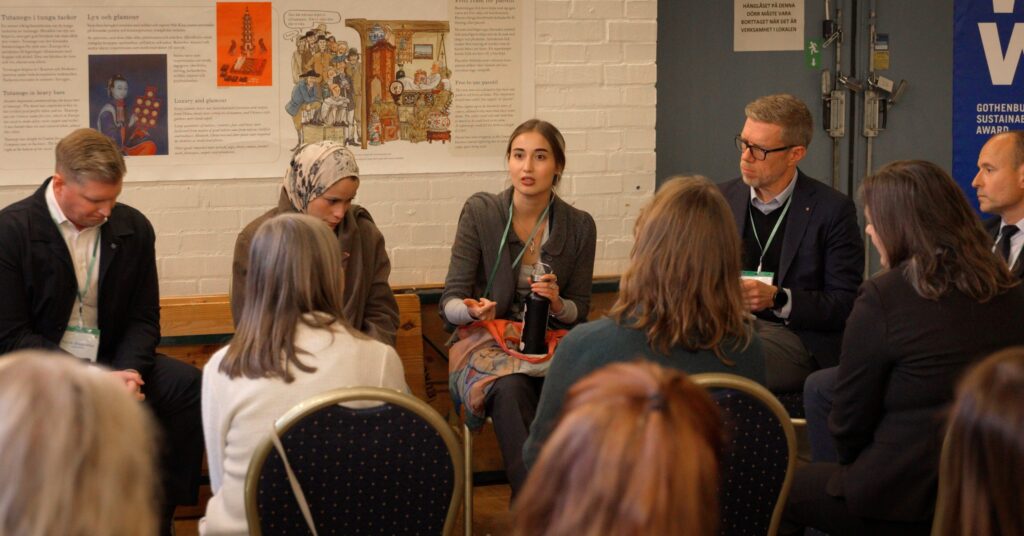
Trust requires both representation and real influence. Several participants made the point that decisions gain legitimacy when the people affected by them, and the evidence behind them, are part of the process:
- Clear direction and shared commitment. Thomas Klein, Head of Marine Management at the Swedish Agency for Marine and Water Management, outlined three pillars of institutional leadership. A clear direction, alignment between stakeholders with different views, and a culture of shared commitment.
- Fair representation in global negotiations. Bethanie Carney Almroth, Professor at the University of Gothenburg and UN Special Rapporteur on toxic’s and human rights, said power-sharing in international talks, such as those on a UN Global Plastics Treaty, is essential for democratic trust. When affected voices or scientific evidence are left out, the process loses its legitimacy.
- Citizens involved in local decisions. Karin Pleijel, Municipal Commissioner for environment and climate in Gothenburg, described citizens assemblies, where a representative group of residents works through complex climate decisions. This builds local ownership, trust and civic pride.
Trust in institutions grows through meaningful participation. From international negotiations to citizens assemblies, inclusive decision-making strengthens legitimacy by involving affected communities, scientific experts and diverse stakeholders. Strong leadership combines clear direction, open dialogue and shared action.
Moving forward without full consensus
Patrik Westraeus, head of sustainability at Greencarrier, pointed to a growing challenge: climate action is increasingly treated as a question of ideology rather than of research. He said actors in the supply chain need to get past opinion-driven barriers through new business models and proactive dialogue across the value chain.
Johan Holmén, Senior Lecturer in Sustainable Transformation at University West, challenged what he called the Swedish consensus trap. Demanding total agreement often stalls decision-making, and it tends to dilute ambition to the lowest common denominator.
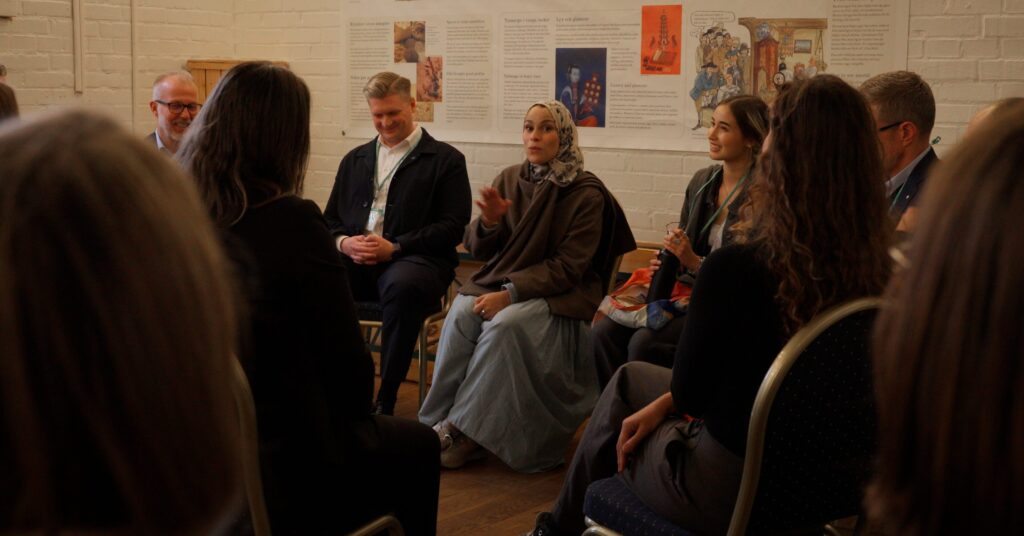
In response, Dr. Alaa Murabit used an Arabic proverb:
– We need to agree on where we’re going, but we need to disagree on our strengths enough that I want to work with you.
Julieta Martínez’s initiative “Make dialogue hot again” builds on the same idea. Creating safe spaces for courageous debate and practical progress.
The conversation ended on that note. Instead of chasing full consensus, the participants called for productive friction. Spaces where people can disagree openly and still move forward together.
Participants included:
Dr. Alaa Murabit, WIN WIN award laureate
Julieta Martínez, WIN WIN youth award laureate
Göran Eriksson, CEO Port of Gothenburg
Fredrik Hellman, Global Director Climate Resilience & Head of Environment, AstraZeneca
Johanna Lundgren, lawyer specializing in environmental law, Lindahls Advokatbyrå
Johan Holmén Senior Lecturer Sustainable Transformation, University West.
Ida-Maja Hasselöv, Head of Maritime Environmental Science, Chalmers
Patrik Westraeus, Head of Sustainability, Greencarrier
Thomas Klein, Head of Marine Management, Swedish Agency for Marine and Water Management
Karin Pleijel, Municipal Commissioner for environment and climate in Gothenburg
Bethanie Carney Almroth, Professor, Biological & Environmental Sciences, University of Gothenburg and UN Special Rapporteur on toxics and human rights
Read more about the 2026 laureates here.