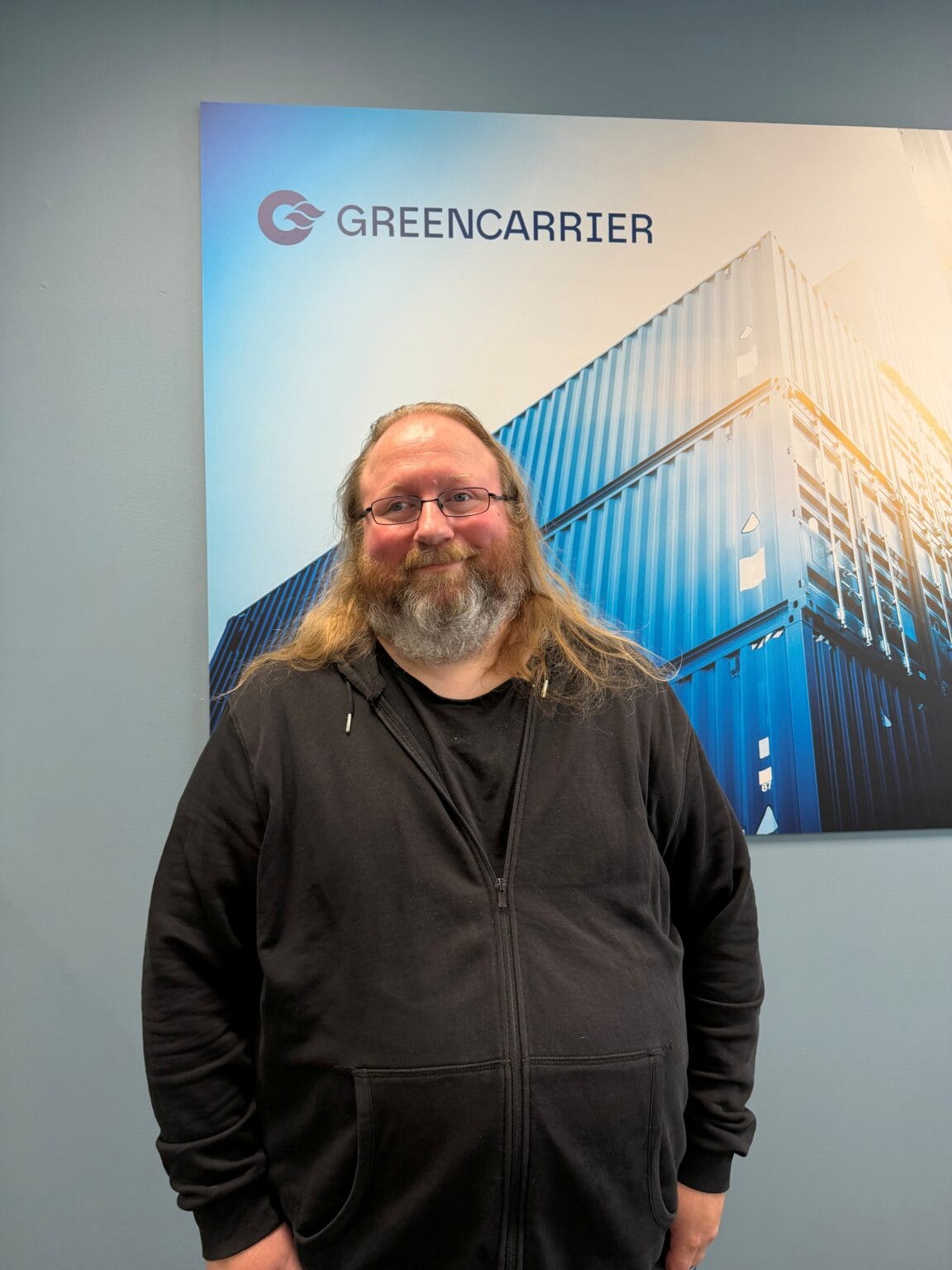
In 2006, Frode Jensen took a summer job while studying to become a teacher. Twenty years later, he is still at Greencarrier – and has seen the shipping industry go from paper archives to digital systems and AI.
– Sometimes you just must take a chance when life throws an opportunity your way, he says.
Frode was studying English, religion and ethics when he started as a summer temporary in the import department at what was then called Greenship, today known as Greencarrier Liner Agency. When autumn came, he was offered a permanent position – and chose shipping over returning to university.
– I could have gone back and finished my degree, but sometimes you just must take a chance when life throws an opportunity your way. I don’t regret the choice I made in 2006, says Frode Jensen.
Over the years, he has worked with imports, exports and sales. Today, he is a customer service expert at Greencarrier Liner Agency in Oslo.
From paper archives to paperless
Two decades ago, the daily routine of shipping was far more analog. In Oslo, the office maintained massive physical paper archives filled with old shipment-files and invoices. The Oslo office handled everything from invoicing to container registrations on its own.
– Everything was much more analogue back then. Here in Oslo, we had huge archives full of old files from old shipments. When I started, you could go and dig out invoices from 1995.
Today, the office is almost completely paperless. Modern IT systems and back-office support have taken over much of the routine work, and that has changed what the job is about.
– We spend less time per container and have more time for our customers. We don’t have the same pressure we had back then, so we can be more present when a customer wants to discuss something.
Over the past twenty years, both the shipping industry and Greencarrier have undergone a major digital evolution. Thanks to efficient systems and a close-knit team, this smaller, flexible group successfully manages significantly higher production volumes than before.
A culture built by a family
Over twenty years, Frode has seen both the highs and the lows – from the financial crisis in 2008–2009 to Greencarrier’s growth into one of the largest transport and logistics companies in the Nordics. Through it all, one thing has stayed the same: the feeling of working for a company that sees its people
– The conclusion I’ve come to is that one of the best places to work is a Swedish family business. You don’t feel like you’re working for a faceless corporation. We work for a company that knows people are what matters – none of us are invisible.
“We work for a company that knows people are what matter – none of us are invisible.”
Looking ahead, Frode sees AI as the industry’s next big shift. He uses it as a tool, for example, to find information or check spelling and grammar, but he is cautious about relying on it too much.
– I’m a little afraid it can become a crutch – that we use it so much that we forget how to do the work ourselves.
For him, the biggest risk is losing personal contact with customers.
– There’s nothing as impersonal as getting an email written by AI and signed by a human. Otherwise, you end up with an AI writing an email for us and the customer’s AI writing back. Then nobody is actually talking to each other anymore.
So, what is Frode proud of having contributed to during the years? Among other things, how Greencarrier meets its customers. He was part of setting the goal that customer emails should be answered within two hours – and customers often tell the team how easy it is to simply pick up the phone and get an answer.
– We don’t always have the answers customers want, but at least we have an answer. And they shouldn’t have to feel like they’re talking to a bot.
Curious about working at Greencarrier? Visit our career page to explore different roles and meet more of the people behind our business.