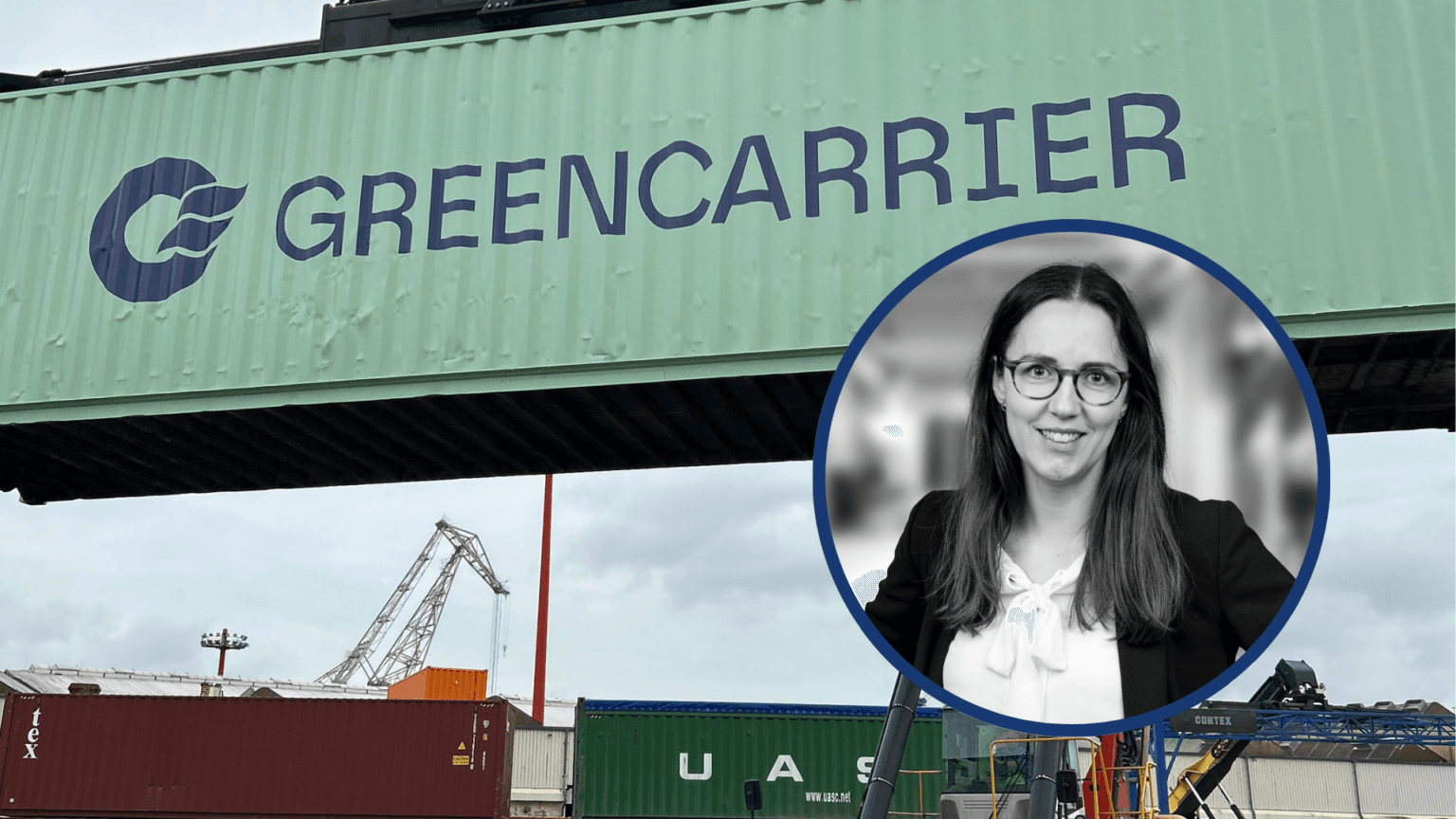
By Janni Hartmann, Branch Manager Denmark, Greencarrier Consolidators
Building resilient supply chains requires more than cost efficiency. As trade routes shift and disruptions persist, smarter freight consolidation can help businesses adapt and maintain reliable transport flows.
Reliable trade lanes, predictable transit times and established shipping schedules have enabled businesses to optimize logistics for efficiency and cost. However, businesses can no longer rely on that level of predictability.
For more than a year, vessels have been rerouted away from the Red Sea via the Cape of Good Hope. What initially appeared to be a temporary disruption has become part of a broader shift in global trade. Longer transit times, capacity constraints and increased volatility are no longer exceptional events—they are becoming part of the operating environment.
The challenge is not simply that disruptions occur. It is that many supply chains are still designed for a level of predictability that no longer exists.
“Over the past year, we’ve seen the conversations with customers change. It’s no longer just about transit times or freight rates—it’s about how quickly supply chains can adapt when conditions change. Resilience has become a strategic priority rather than a nice-to-have.”
– Janni Hartmann, Branch Manager Denmark, Greencarrier Consolidators
When efficiency alone is not enough
Consolidation has always been about creating value through efficiency—bringing shipments together to optimize capacity, reduce costs and improve service.
Those principles remain important.
However, today’s environment requires something more. Customers increasingly need logistics solutions that can adapt when trade routes change, capacity tightens or demand shifts unexpectedly.
Resilience has become just as important as efficiency.
Why Nordic supply chains are feeling the pressure
For Danish and Nordic exporters and importers, these changes are becoming increasingly tangible.
Industries such as pharmaceuticals, industrial manufacturing and renewable energy depend on reliable transport flows between Asia and Europe. At the same time, Nordic businesses remain heavily reliant on inbound shipments of components, raw materials and consumer goods from Asia.
When disruption becomes structural rather than temporary, highly optimized supply chains can quickly become vulnerable.
The question is no longer whether disruption will occur—but how businesses prepare for it.
Rethinking the role of consolidation
As global trade becomes more complex, the role of the consolidator is evolving.
Success is no longer defined solely by securing the lowest freight rate or maximizing utilization. It is increasingly about helping customers maintain reliable supply chains despite changing market conditions.
That requires greater flexibility in how consolidation networks are designed and managed.
Instead of relying on fixed routing, consolidators need the ability to adapt transport flows when circumstances change. Diversified carrier options, multiple gateway strategies and close coordination across logistics partners all contribute to making supply chains more resilient.
In some situations, hybrid transport solutions—combining consolidation with direct shipments on selected lanes—may also provide the flexibility needed to maintain continuity.
None of this eliminates complexity. In fact, building resilience often requires greater planning, stronger partnerships and accepting that maximum efficiency is not always the optimal outcome.
Designing for resilience
The Red Sea crisis has highlighted a broader reality.
Geopolitical disruption is becoming a long-term factor in global logistics rather than a temporary exception.
For both shippers and logistics providers, the challenge is therefore changing. The objective is no longer simply to optimize supply chains for cost and efficiency, but to design them for resilience.
Consolidation remains a valuable part of that equation—but its role is evolving.
In a more unpredictable world, the greatest value a consolidator can provide is not only moving freight efficiently, but helping customers navigate uncertainty with confidence.
The logistics landscape is changing. Whether you’re looking to strengthen resilience, improve flexibility or rethink your consolidation strategy, we’re here to help you navigate what’s next.